Best Insoles for Badminton Shoes: Performance, Support & Fit
Badminton is one of the most demanding court sports on your feet. The rapid lateral cuts, explosive jump smashes, and split-step landings put stress on your arches, heels, and ankles that most standard shoe insoles are not built to handle. The right insoles for badminton shoes absorb that impact, stabilize your foot through directional changes, and reduce the fatigue that builds up over a long session.
This guide reviews the 10 best insoles for badminton shoes, explains what makes badminton different from other sports, and helps you find the right fit for your foot type and playing style.
Key Takeaways
- Badminton demands lateral stability and shock absorption that general athletic insoles often lack
- Arch support is the most important feature for preventing Achilles and plantar fascia injuries common in court sports
- The RMF-009 Badminton Shock Absorbing Insoles are built specifically for court play; Superfeet Green and Tread Labs Stride are strong alternatives for high-arch and high-mileage players
- Full-length insoles outperform heel-only inserts for badminton because they stabilize the entire foot through lateral movement
- Most players see a noticeable difference in comfort and fatigue within the first two sessions
Why Badminton Demands Specialized Insoles
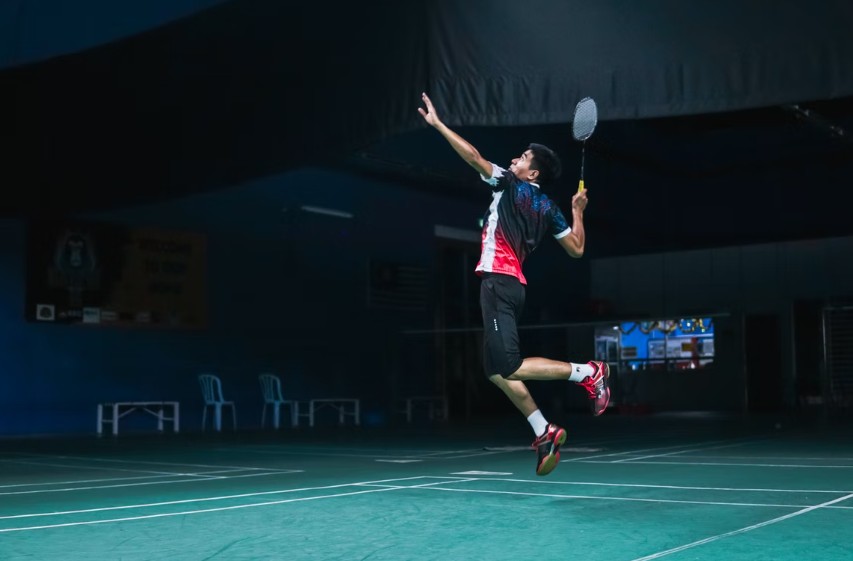
Badminton is not a forward-motion sport. Unlike running, where your foot strikes the ground in a predictable heel-to-toe pattern, badminton involves constant direction changes, explosive lateral lunges, and repeated jump landings. Each of these movements loads your foot differently.
A lateral lunge to reach a drop shot puts significant stress on the outer edge of your foot and your ankle. A jump smash landing concentrates impact through the ball of your foot and heel simultaneously. A split-step puts rapid load through both feet at once. Standard running insoles are designed for forward motion and do not provide the lateral stability these movements require.
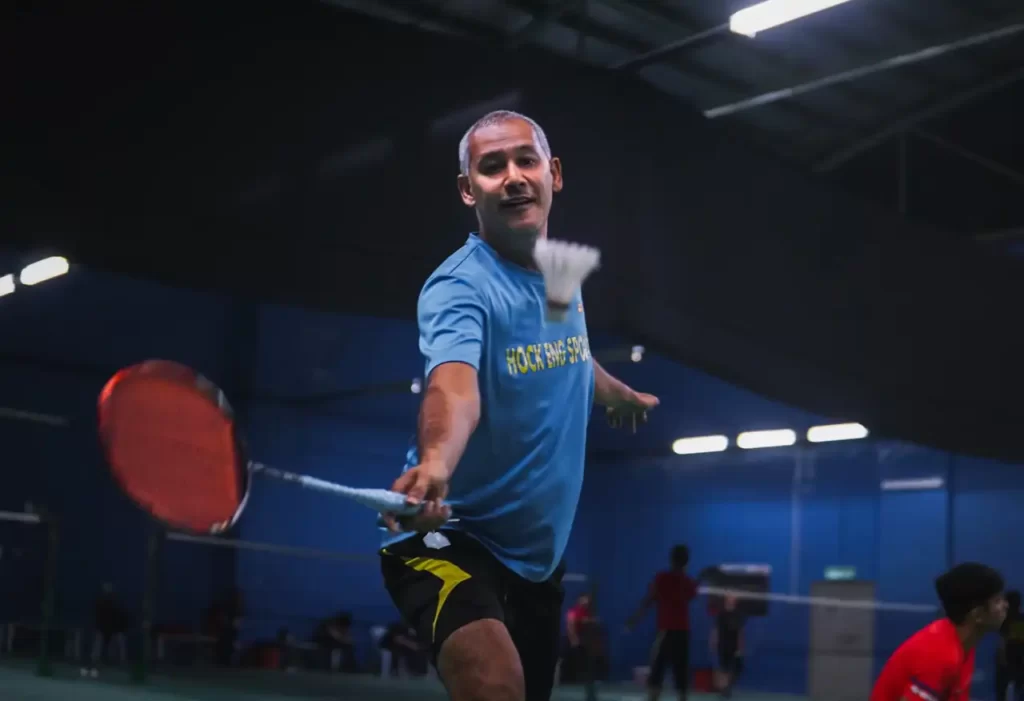
Badminton shoes are also built with thin, non-marking soles and low heel-to-toe drop to keep you close to the court surface. This improves agility but reduces the cushioning built into the shoe itself. A quality insole compensates for that trade-off, adding shock absorption and arch support without raising your foot height enough to affect your court feel.
Many badminton players develop plantar fasciitis, Achilles tendonitis, and metatarsal pain from playing without adequate support. Professional players including Lin Dan, Lee Chong Wei, Kento Momota, Carolina Marin, and P. V. Sindhu all use custom orthotics or performance insoles as part of their equipment setup. The same principles apply at every level of play.
Good to Know
Most badminton shoes come with thin, flat factory insoles designed to keep weight down. Replacing them with a performance insole adds meaningful cushioning and arch support without significantly affecting shoe fit, most quality insoles add less than 3mm of height.
Quick Comparison: Best Insoles for Badminton Shoes
| Insole | Best For | Arch Support | Cushioning | Price |
|---|---|---|---|---|
| RMF-009 Badminton Insoles | Court-specific shock absorption | Medium-firm | High | ~$25 |
| Superfeet Premium Green | High arches, biomechanical correction | Firm | Moderate | ~$55 |
| Powerstep Original Full Length | Flat feet, overpronation | Firm | Moderate | ~$40 |
| Spenco Polysorb Cross Trainer | High-impact play, runners | Medium | High | ~$30 |
| SOLE Active Thin Sport | Neutral arches, heat-moldable fit | Medium | Moderate | ~$45 |
| Vionic Full-Length Active | Podiatrist-designed correction | Firm | Moderate | ~$50 |
| Walk-Hero Comfort & Support | Recreational players, long sessions | Medium | High | ~$20 |
| Tread Labs Stride | High-mileage, durable option | Firm | Moderate | ~$75 |
| Sof Sole Airr Performance | Shock absorption, sensitive heels | Low-medium | Very high | ~$25 |
| Samurai Insoles | Flat feet, budget option | Medium-firm | Moderate | ~$25 |
Features to Look for in Badminton Shoe Insoles
Not every insole marketed for sports is suited to badminton. Here is what actually matters for court play.
Lateral stability. The insole needs a deep heel cup and a firm arch to keep your foot from rolling inward during lateral lunges. A shallow heel cup allows the heel to shift sideways, increasing ankle sprain risk.
Shock absorption. Jump smash landings generate significant impact force. Multi-layer construction with a firm base and a softer top layer absorbs that force without collapsing under repeated use. Single-layer foam insoles compress quickly and lose their cushioning within weeks of regular play.
Arch support level. Match the arch support to your foot type. Flat feet and low arches need firm support to prevent overpronation. Neutral arches do well with medium support. High arches need a contoured insole that fills the arch gap without pushing the foot into an unnatural position.
Thin profile. Badminton shoes have limited volume. A thick insole can make the shoe feel tight and restrict foot movement. Look for insoles designed for low-profile athletic shoes, or check the manufacturer’s thickness specification before buying.
Breathability. Court sports generate heat. Insoles with perforated top covers or moisture-wicking materials keep your feet cooler and reduce blister risk during long sessions.
Best Insoles for Badminton Shoes: Full Reviews
There are many situations where insole and orthotic will help you to gain more performance and help you to prevent or treat some injuries. So, which insoles and orthotic for badminton shoes? I have some recommendations for you.
RMF-009 Badminton Shock Absorbing Insoles (Best Insole For Badminton)
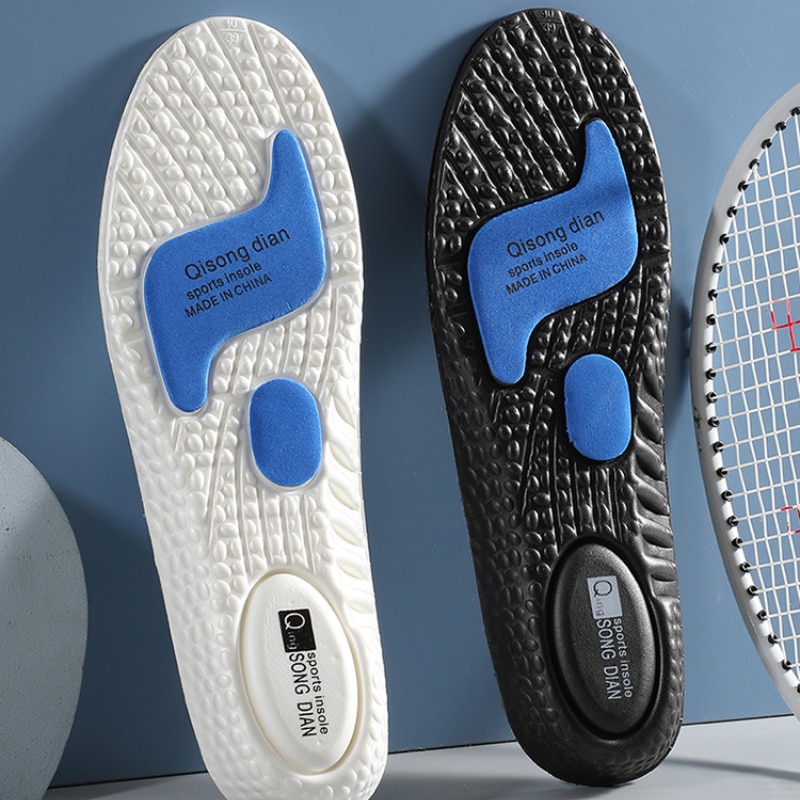
Best for:Badminton players who want an insole built specifically for court play.
The RMF-009 is the only insole on this list designed specifically for badminton. The shock-absorbing cushion layer is positioned to handle the heel and forefoot impact patterns of court play, and the breathable top cover manages heat during extended sessions. The medium-firm arch support suits neutral to mild overpronation.
The thin profile fits most badminton shoes without requiring removal of the factory insole. At around $25, it is the most cost-effective court-specific option available.
Pros: Court-specific design, breathable top cover, thin profile, good shock absorption Cons: Medium arch support may not be sufficient for severe flat feet or high arches
Superfeet Premium Insoles – Green
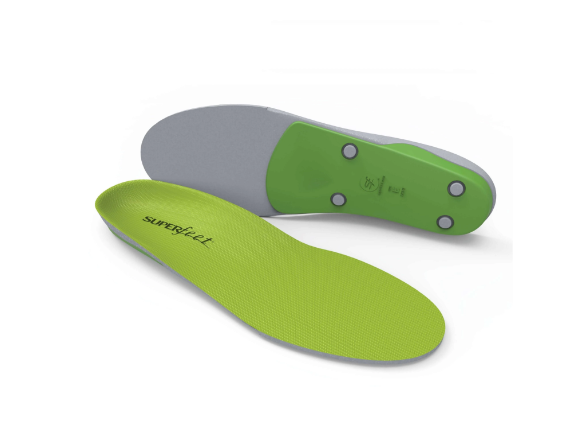
Best for: Players with high arches or significant overpronation who need firm biomechanical correction.
Superfeet Green insoles use a high-profile stabilizer cap and firm foam base to correct foot alignment from the heel up. The deep heel cup is one of the deepest available in an over-the-counter insole, providing strong lateral stability for directional changes. The arch support is firm and high, making these the right choice for players with pronounced arches.
They are not the best fit for flat feet or low arches, where the high arch profile can feel uncomfortable. For neutral to high arches, they are among the most effective insoles available.
Pros: Deep heel cup, firm arch correction, durable, widely trusted by athletes Cons: High arch profile uncomfortable for flat feet; higher price (~$55)
Powerstep Original Full Length Orthotic: Best for Flat Feet and Overpronation
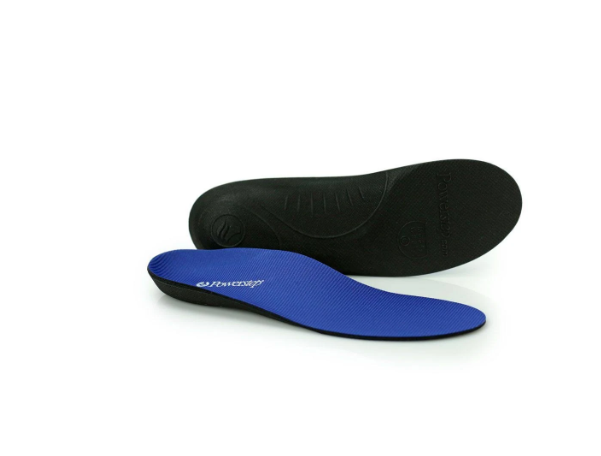
Best for: Players with flat feet whose foot rolls inward during lateral movement.
Powerstep Original insoles use a semi-rigid arch support shell that corrects overpronation without the stiffness of a full orthotic. The dual-layer cushioning provides good shock absorption for jump landings. The heel cup is moderately deep and keeps the heel stable through directional changes.
For badminton players with flat feet who experience Achilles or plantar fascia pain, the Powerstep Original addresses the mechanical cause directly. The arch support insoles for flat feet from RoamingFeet offer a comparable level of correction at a similar price point.
Pros: Semi-rigid arch correction, dual-layer cushioning, good for overpronation Cons: Slightly bulkier than court-specific options; may require removing factory insole
Spenco Polysorb Cross Trainer: Best for High-Impact Play
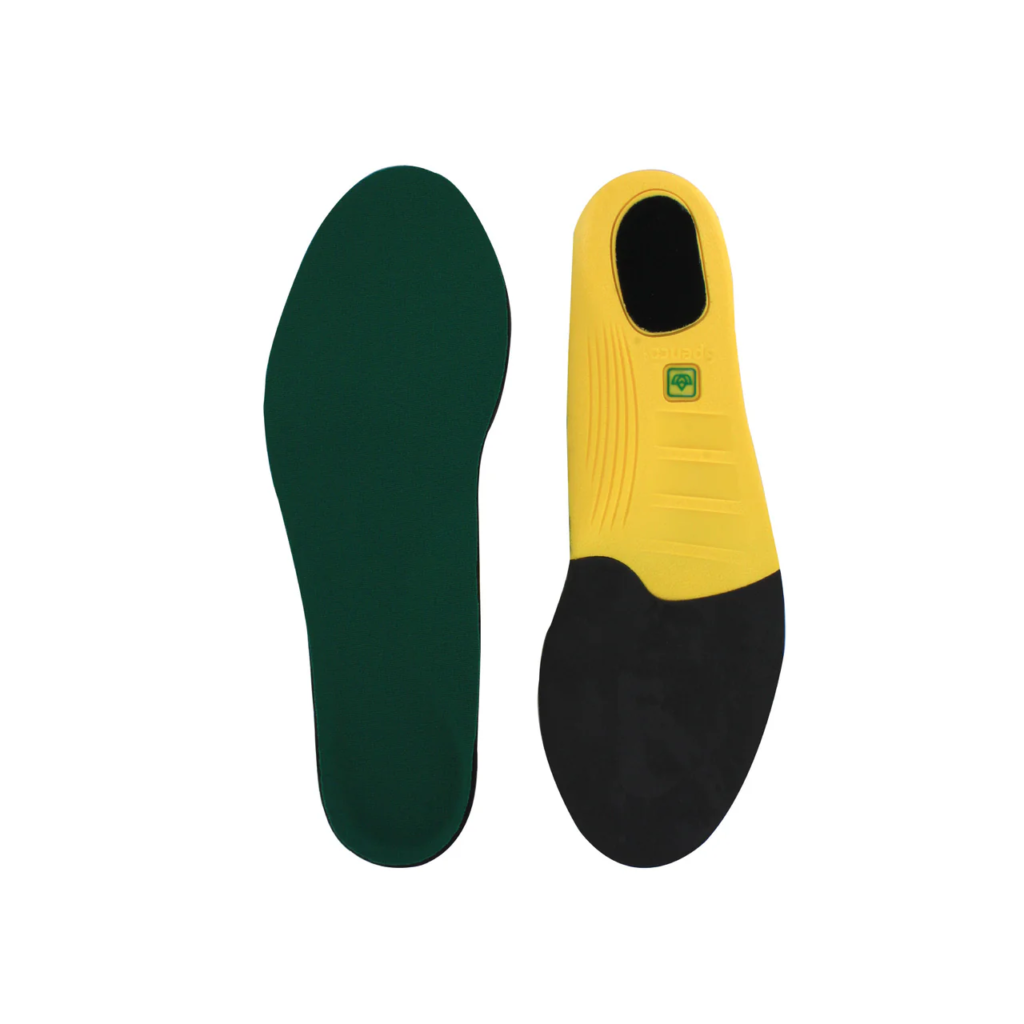
Best for: Aggressive players who generate high impact through jump smashes and explosive footwork.
Spenco Polysorb insoles use a 4-POD cushioning system that absorbs shock across the heel and forefoot simultaneously. This makes them particularly effective for the jump smash landing pattern in badminton. The arch support is medium-firm, suitable for neutral to mild overpronation.
They hold up well under repeated high-impact use, which is a common failure point for cheaper insoles that compress and lose cushioning after a few weeks of regular play.
Pros: Excellent shock absorption, durable, designed for high-impact sports Cons: Medium arch support insufficient for severe overpronation; slightly thicker profile
WalkHero Metatarsal Pads
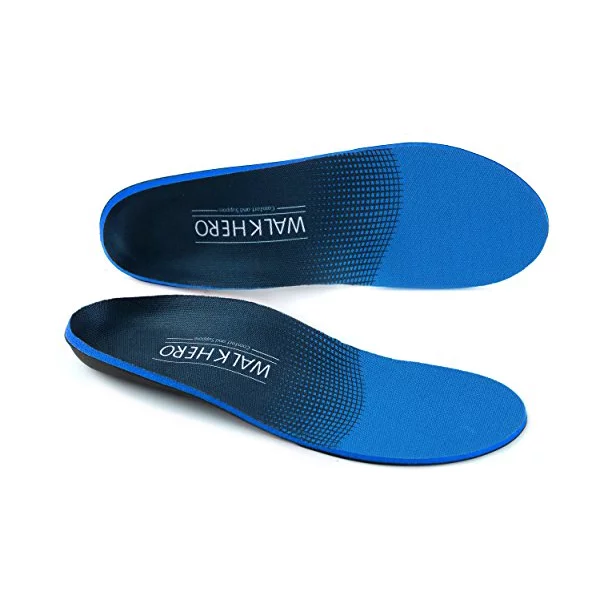
Best for: Recreational players who want better comfort and cushioning without spending over $25.
Walk-Hero insoles combine medium arch support with generous heel and forefoot cushioning. They are not as firm as the Superfeet or Vionic options, but they provide meaningful improvement over factory insoles for players with mild overpronation. The cushioning holds up reasonably well over a season of recreational play.
Pros: Good cushioning, affordable (~$20), comfortable for long sessions Cons: Softer arch support limits effectiveness for moderate to severe overpronation
SOLE Active Thin Sport: Best for Neutral Arches and Custom Fit
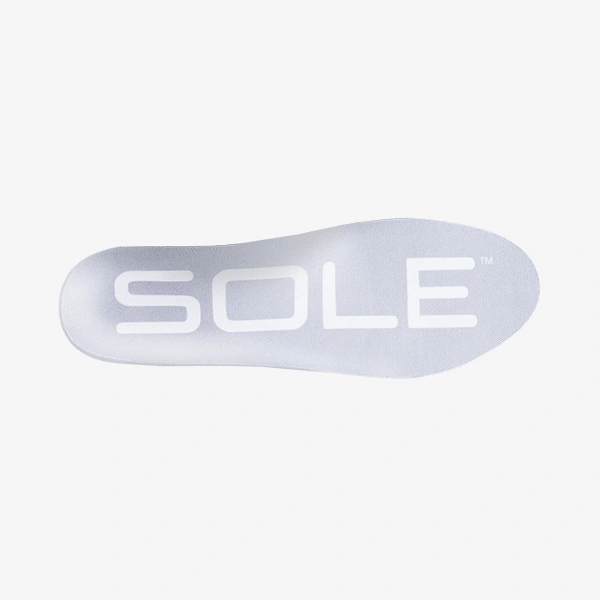
Best for: Players with neutral arches who want a heat-moldable insole that conforms to their foot shape.
SOLE Active Thin insoles can be heat-molded in a standard oven to create a semi-custom fit. The thin profile is designed for low-volume athletic shoes, making it one of the better fits for badminton shoes specifically. The cork and EVA base provides medium arch support and good durability.
The heat-molding process takes about 10 minutes and produces a noticeably more personalized fit than off-the-shelf insoles. Not the best choice for severe flat feet, where a firmer, higher arch support is needed.
Pros: Heat-moldable, thin profile, good for neutral arches, durable cork base Cons: Medium support insufficient for severe overpronation; higher price (~$45)
Vionic Full-Length Active Orthotic: Best Podiatrist-Designed Option
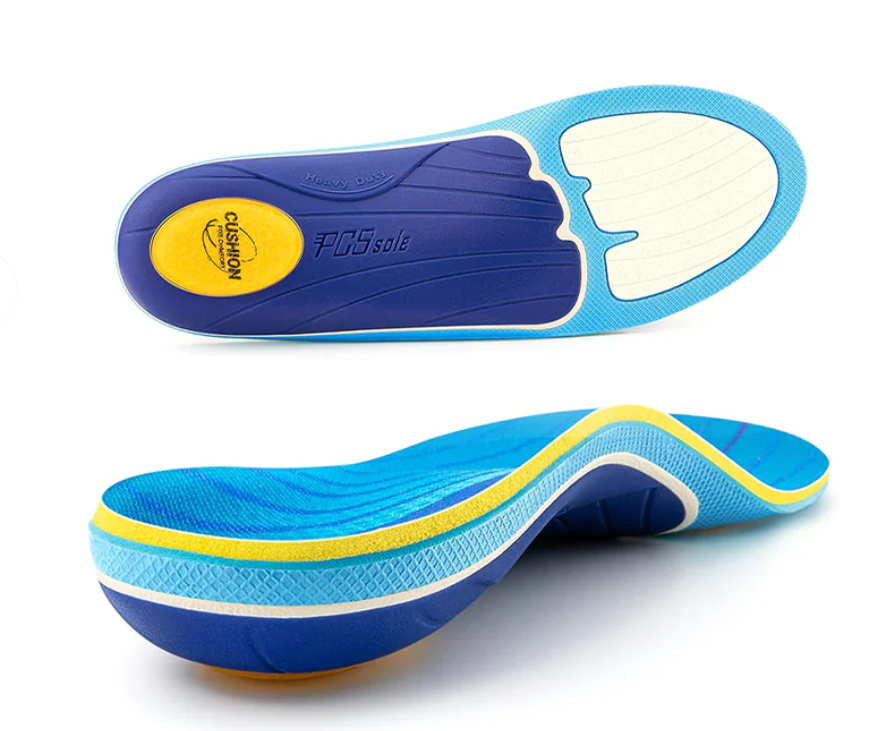
Best for: Players who want podiatrist-designed arch support without the custom orthotic price tag.
Vionic insoles use a firm orthotic shell developed with podiatrist input to correct foot alignment. The arch support is among the firmest available in an over-the-counter insole, and the heel cup is deep and well-structured. For players with moderate to severe overpronation, Vionic provides a level of correction that most sport insoles do not reach.
Pros: Podiatrist-designed, firm orthotic shell, deep heel cup Cons: Higher price (~$50); may feel too firm for players accustomed to soft insoles
Walk-Hero Comfort & Support: Best Budget Option for Recreational Players
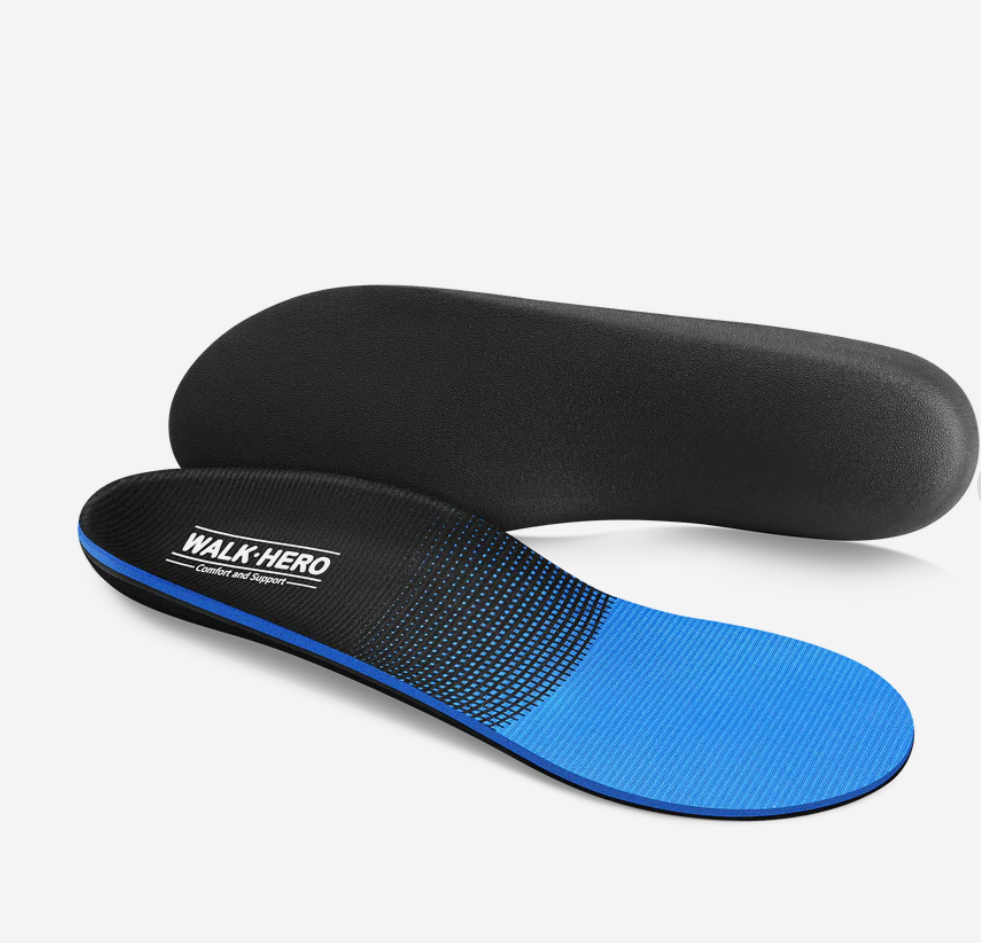
Best for: Recreational players who want better comfort and cushioning without spending over $25.
Walk-Hero insoles combine medium arch support with generous heel and forefoot cushioning. They are not as firm as the Superfeet or Vionic options, but they provide meaningful improvement over factory insoles for players with mild overpronation. The cushioning holds up reasonably well over a season of recreational play.
Pros: Good cushioning, affordable (~$20), comfortable for long sessions Cons: Softer arch support limits effectiveness for moderate to severe overpronation
Tread Labs Stride: Best for High-Mileage and Competitive Players
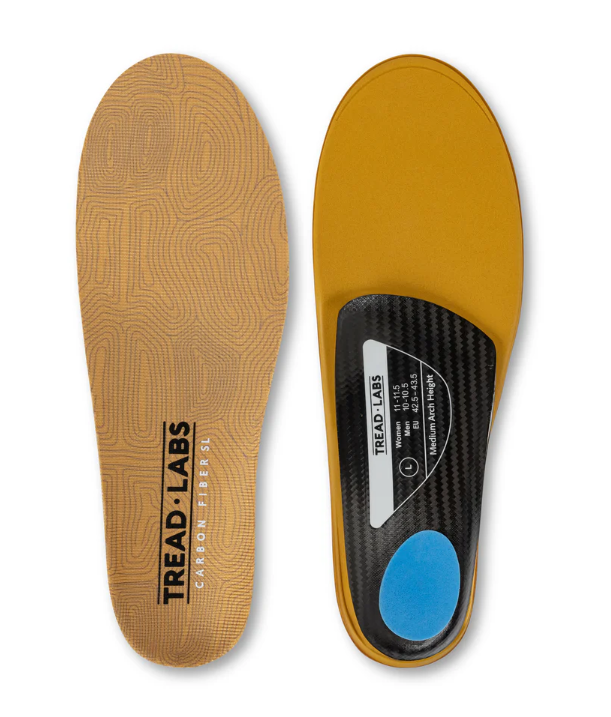
Best for: Competitive players who train frequently and need insoles that last through heavy use.
Tread Labs Stride insoles use a polypropylene arch support shell that does not compress or lose its shape over time. They come in four arch heights, allowing precise matching to your foot type. The replaceable top cover extends the insole’s life significantly. At ~$75, they are the most expensive option on this list, but the durability justifies the cost for players who train multiple times per week.
Pros: Four arch heights, replaceable top cover, extremely durable, firm polypropylene shell Cons: Highest price (~$75); requires knowing your arch height
Sof Sole Airr Performance: Best for Shock Absorption and Sensitive Heels
Best for: Players with heel sensitivity or insertional Achilles tendonitis who need maximum cushioning.
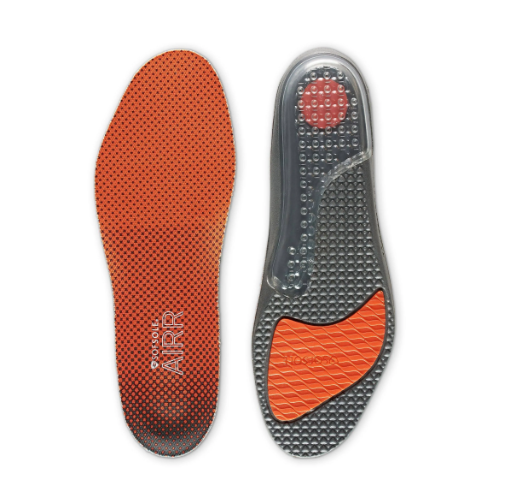
Sof Sole Airr insoles use gel heel and forefoot pads alongside an air chamber in the heel to absorb impact. They are better suited for players whose primary need is cushioning rather than arch correction. The arch support is low to medium and will not correct significant overpronation, but for heel-sensitive players the cushioning is among the best available.
The silicone gel insoles from RoamingFeet are a comparable option for players who prioritize heel cushioning and shock absorption.
Pros: Excellent shock absorption, air chamber heel cushioning, comfortable for sensitive heels Cons: Low arch support; not effective for overpronation-driven foot pain
Samurai Insoles: Best Budget Option for Flat Feet
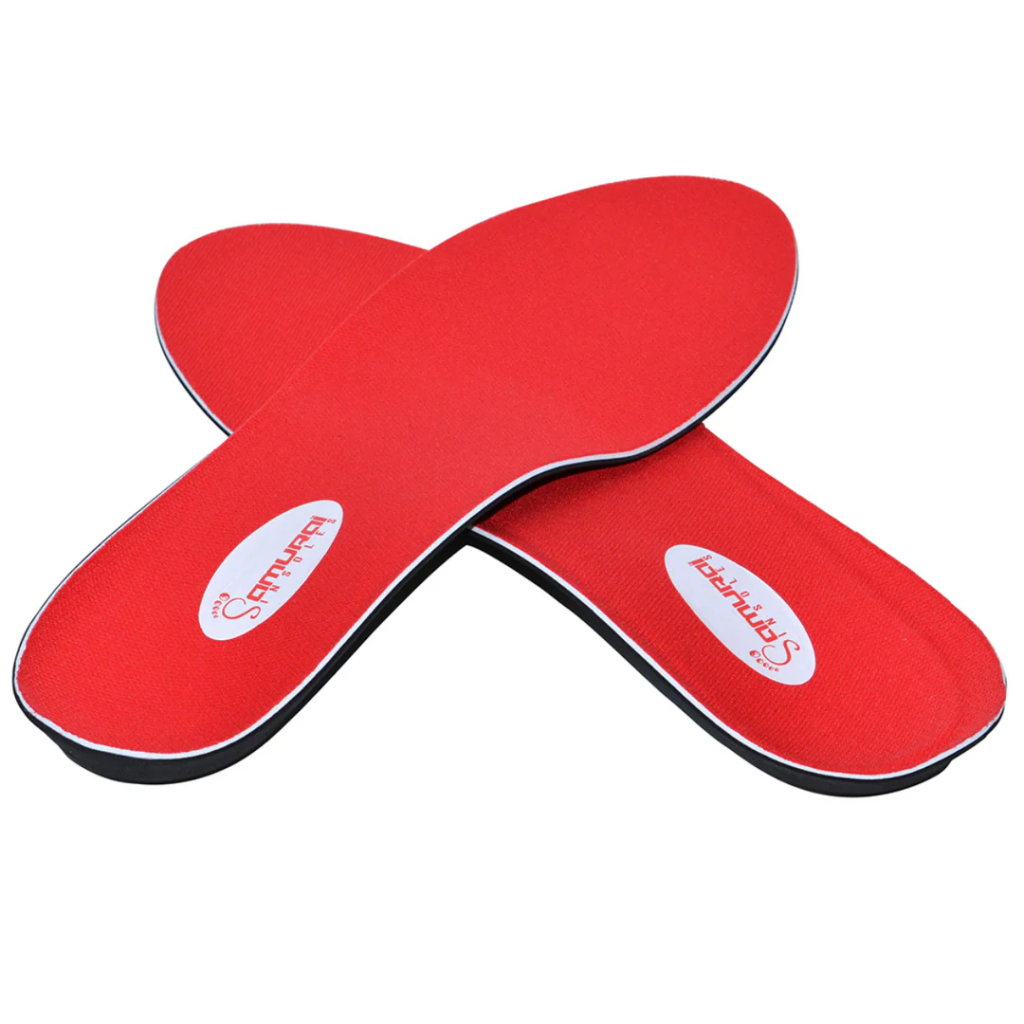
Best for: Players with flat feet who want more arch correction than budget foam insoles provide.
Samurai Insoles use a semi-rigid arch support design that provides more correction than soft foam insoles at a similar price point. The heel cup is reasonably deep for the price. A solid option if you want more arch support than Walk-Hero without spending $40 or more.
Pros: Semi-rigid arch support, good value (~$25), trimmable Cons: Less durable than premium options; heel cup shallower than Superfeet or Vionic
Understanding the Different Types of Insoles
Cushioned insoles prioritize shock absorption over arch correction. They use foam, gel, or air chambers to reduce impact force. Best for players with neutral arches whose primary concern is comfort and fatigue reduction.
Supportive insoles use a semi-rigid or rigid arch support shell to correct foot alignment. They address overpronation and provide lateral stability. Best for players with flat feet or low arches who experience Achilles, plantar fascia, or knee pain.
Shock-absorbing insoles combine cushioning materials with a structured base. They suit high-impact play and players who generate significant force through jump smashes and explosive footwork.
For most badminton players, a supportive insole with built-in cushioning covers both needs. Pure cushioning insoles without arch support are a short-term comfort fix that does not address the mechanical causes of court-sport foot injuries.
Arch Support: Why It Matters in Badminton Shoes
The arch is the foot’s primary shock-absorbing structure. When the arch collapses inward during a lateral lunge, the ankle rolls in, the shin rotates internally, and the knee absorbs force it was not designed to handle. Over a season of regular play, this cumulative stress leads to the most common badminton foot injuries: plantar fasciitis, Achilles tendonitis, and shin splints.
Arch support insoles hold the foot in a neutral position throughout the gait cycle, reducing the inward roll and the chain of stress it creates. For players with flat feet, this correction is the single most effective injury prevention measure available outside of custom orthotics.
Important
If you experience sharp heel pain, pain along the bottom of your foot, or Achilles pain that does not improve after two weeks of using supportive insoles, consult a podiatrist. Persistent foot pain during sport can indicate a stress fracture or tendon injury that requires professional assessment.
How to Fit Insoles in Your Badminton Shoes
Measuring Your Foot
Remove the factory insole from your badminton shoe and place it on a flat surface. Stand on it with your full weight. If your foot extends beyond the insole’s edges, size up. If the insole is significantly larger than your foot, trim it down using the factory insole as a template.
Trimming to Fit
Most quality insoles are trimmable. Use sharp scissors and cut along the marked trim lines, or use your factory insole as a cutting guide. Always trim from the toe end, not the heel. The heel cup position is fixed and should not be altered.
Testing for Comfort and Stability
Insert the trimmed insole and lace your shoe to your normal tension. Walk for five minutes, then perform a few lateral shuffles and a light jump. The insole should feel supportive without creating pressure points. A break-in period of three to five sessions is normal as your foot adjusts to the new arch position.
Custom Orthotics vs. Over-the-Counter Insoles for Badminton
Custom orthotics are prescribed by a podiatrist and molded to your exact foot shape. They provide the most precise correction available and are worth considering for players with severe overpronation, structural foot abnormalities, or recurring injuries that have not responded to over-the-counter insoles.
For most recreational and club-level players, quality over-the-counter insoles perform comparably to custom orthotics for common presentations of court-sport foot pain. At 20 to 75 versus 300 to 600 for custom orthotics, starting with a quality OTC insole is the sensible first step. If symptoms persist after 8 to 12 weeks of consistent use, a podiatrist assessment is the right next move.
For a broader look at insoles for tendon-related conditions that affect court players, see the best insoles for tendonitis guide.
Common Problems with Insoles and How to Fix Them
Heel slippage. The insole shifts backward during play. Cause: insole is too small or the heel cup is too shallow. Fix: size up, or choose an insole with a deeper heel cup (Superfeet Green, Vionic).
Lack of cushioning after a few weeks. The insole feels flat and hard. Cause: single-layer foam has compressed. Fix: replace with a multi-layer insole (Spenco Polysorb, Sof Sole Airr) or a polypropylene-shell insole that does not compress (Tread Labs Stride).
Arch pain after switching insoles. New arch support feels uncomfortable. Cause: your foot is adjusting to a corrected position. Fix: wear the insoles for short sessions initially and build up over one to two weeks. If pain persists beyond two weeks, the arch height may be too high for your foot type, try a lower arch option.
Conclusion
The best insoles for badminton shoes match your foot type and playing style. For court-specific shock absorption, the RMF-009 is the purpose-built choice. For flat feet and overpronation, the Powerstep Original or Superfeet Green provide the arch correction that prevents the most common badminton foot injuries. For maximum cushioning, the Sof Sole Airr handles heel impact effectively.
Whichever insole you choose, replace the factory insole rather than stacking on top of it. Most badminton shoes do not have the volume for two insoles, and stacking raises your foot height enough to affect your court feel.
Your feet take the full force of every lunge, jump, and landing. The right insole is one of the lowest-cost, highest-impact investments you can make in your game.
Ready to protect your feet on court?
The RMF-009 Badminton Shock Absorbing Insoles are built specifically for the lateral demands of court play, shock absorption, arch support, and a thin profile that fits most badminton shoes.Shop Badminton Insoles →
Free returns on all orders · 30-day money-back guarantee
Frequently Asked Questions
What are the best insoles for badminton shoes?
The RMF-009 Badminton Shock Absorbing Insoles are the best court-specific option. For players with flat feet, the Powerstep Original or Superfeet Green provide stronger arch correction. For maximum cushioning, the Sof Sole Airr handles heel impact well. Match your choice to your foot type and the type of pain or discomfort you experience.
Can I use running insoles in badminton shoes?
Running insoles are designed for forward-motion heel-to-toe movement and do not provide the lateral stability badminton requires. They can work as a temporary measure, but a court-specific or multi-sport insole will perform better for the directional changes and jump landings in badminton.
How long do badminton insoles last?
Most foam-based insoles last three to six months of regular play before the cushioning compresses noticeably. Polypropylene-shell insoles like the Tread Labs Stride last significantly longer. Replace insoles when they feel flat, when the heel cup loses its shape, or when foot pain returns after a period of relief.
Do I need custom orthotics for badminton?
Most players do not. Quality over-the-counter insoles perform comparably to custom orthotics for common presentations of court-sport foot pain. Custom orthotics are worth considering for severe overpronation, structural foot abnormalities, or recurring injuries that have not responded to OTC insoles after 8 to 12 weeks.
Are custom orthotics worth it for recreational badminton players?
For recreational players without a diagnosed structural foot problem, quality OTC insoles at 20 to 75 provide comparable results to custom orthotics at 300 to 600. Start with a quality OTC insole. If symptoms persist after two to three months of consistent use, consult a podiatrist.
What type of arch support is best for badminton?
It depends on your foot type. Flat feet and low arches need firm arch support to prevent overpronation during lateral movement. Neutral arches do well with medium support. High arches need a contoured insole that fills the arch gap. If you are unsure of your arch type, wet your foot and step on a piece of paper, a full footprint indicates flat feet; a narrow connection between heel and forefoot indicates a high arch.